What is the meaning of the phrase “Under the Law”?

Attitdues

What is the meaning of the phrase “Under the Law”?


In Romans 6:14, Paul wrote: “For sin shall not have dominion over you: for ye are not under the law, but under grace.”

People use this one verse to say that God’s Law is no longer necessary in a believers life and that we do not have to obey it any longer. What does this verse really mean? The key with this verse, and all verses, is the context.

In the next two verses, Paul wrote, “What then? shall we sin, because we are not under the law, but under grace? God forbid. Know ye not, that to whom ye yield yourselves servants to obey, his servants ye are to whom ye obey; whether of sin unto death, or of obedience unto righteousness?” (Rom. 6:15-16)

One definition of sin in the Bible is transgression of God’s Law (I John 3:4). To clarify the phrase “under the law”, we must go to the other letters of Paul.

In Galatians 4:4-5, Paul wrote: “But when the fulness of the time was come, God sent forth his Son, made of a woman, made under the law, To redeem them that were under the law, that we might receive the adoption of sons” (KJV).

If the phrase “under the law” in Romans 6:14 means obeying the Law, then Paul said in Galatians that Christ only came to redeem those that were obeying the Law. We know that is not true! Christ came to redeem all mankind (John 1:29, 3:16).

The phrase “under the law” means under the penalty of the Law. We were under the judgment of the Law because of our sins! Christ was born under the penalty of the law to free those who were under its penalty – which is all of us! All have sinned and fallen short of the glory of God (Romans 3:23).

In Romans 2:13, Paul wrote: For it is not those who hear the law who are righteous in God’s sight, but it is those who obey the law who will be declared righteous.”

Later in Romans, Paul wrote that the Law is holy, righteous and good (Romans 7:12-14). In Romans 8:7, Paul explains that the sinful mind is hostile to God’s Law and refuses to submit to it.

Being under grace means that we have a grace period to learn right from wrong. We are not under the law’s penalty, but we are not free from its requirements because grace is not a license to sin or transgress God’s Law.

Our goal and aim is to let the Holy Spirit guide us in obedience to the commandments of God. Since we are under grace, we are alive in Christ and enabled to obey the Law of Life (see also Deut. 30:11-15, I John 5:1-5).


Posted in Uncategorized | Leave a comment

The Day of Atonement

Torah Scroll

The Day of Atonement

Tuesday, October 11th at sunset starts the Day of Atonement, also known as Yom Kippur. In Acts 27:9, it is referred to as “the Fast.” This Feast day is much different from the other Feasts. On the other Feasts, you eat the choicest foods possible and rejoice. This day is different in that it is a day of fasting, repentance, and reflection. The fast is from sunset to sunset and is abstaining from both drink and food.

It is on this day in Ancient Israel, atonement was made for the sins of the people. For this reason, the Day of Atonement is called Shabbat Shabbaton or the Sabbath of Sabbaths. It is the holiest day of the year on the Hebrew Calendar because of its significance.

On the Day of Atonement, the High Priest would first wash with water and put on the sacred linen garments from Exodus 28. He was to offer a bull for his own sins and the sins of his household. This shows us that before the high priest could make atonement for others he had to make atonement for himself. The blood of that bull was then applied to the Ark of the Covenant and the Altar of Incense.

Two goats were then chosen and lots would be cast between the two of them. One goat was chosen as a sin offering and the other goat was chosen as the azazel goat or scapegoat. A red thread was tied to each of these two goats and another thread tied to the doorpost of the temple.  The goat chosen for the sin offering was brought to the High Priest. The High Priest would then slaughter the goat and then apply its blood to the Ark of the Covenant and the Altar of Incense. This goat was slain for the nation.

When these sacrifices were completed, the priests would bring forward the goat chosen as the scapegoat. The high priest would place his hands on this goat and confess over it all the sins and wickedness of the Israelites. A chosen man would then chase this goat over a cliff. This was done to keep the goat from bringing the sins of the people back into the camp. As this process took place, the red thread at the doorpost of the tabernacle would turn white. This was to let them know that the Lord had covered their sins. As the Bible says, “though my sins be red as scarlet, you shall make them white as snow.”

After all this was done, the high priest washed in water and changed back into his normal priestly garments. The high priest then left the Holy Place and made more burnt offerings to the Lord. The fat from the sin offerings used in the Most Holy Place and the Holy Place were to be offered with these burnt offerings. Atonement for the people was then complete.

This ritual, performed once a year, atoned for the sins of the Israelites and allowed God to walk in the camp among them. The sacrifices made on this day were made with animals. As the writer of Hebrews explains, the sacrifices of bulls and goats were not sufficient to take away or cleanse sin (Hebrews 9:12-14). They were just an annual reminder for the people that they were sinful and needed Atonement.

That is why Christ had to come and be our atonement. An annual reminder is totally insufficient to wipe away the iniquity and rebellion from our sins. We needed something better than the blood of bulls and goats; we needed the blood of the Son of God.

When the high priest made Atonement for the Israelites, he entered a sanctuary made by the hands of men. Because this original ritual was on earth, it could not give us the standing we need to appear before the Father in Heaven. When we sin, we are deserving of the second, spiritual death. Christ’s sacrifice saves us from the second death in the Lake of Fire if we receive it! In order for us to stand before the Father in Heaven, Christ had to take His perfect blood into a Temple that was not earthly, but spiritual.

In Hebrews 9:23-26, the Bible says, “It was necessary, then, for the copies of the heavenly things to be purified with these sacrifices, but the heavenly things themselves with better sacrifices than these.” Jesus didn’t have to make atonement for His household. He is perfect. Just as the high priest entered into the earthly temple and sprinkled the goat’s blood on the Ark of the Covenant and Altar of Incense, so Christ did the exact same thing with His own blood in Heaven.

There is one aspect of this Atonement ceremony that has yet to come to pass! In this ritual of Atonement, there was a second goat, which was called the azazel goat or the scapegoat. The High Priest confessed all the sins of the people on this goat and a chosen man then chased it off a cliff. This second goat represents Satan, who will have all the sins of mankind confessed over Him by our High Priest, Christ. Christ will then send a chosen angel to bind him for the millennial reign. John was shown this event in Revelation 20:1-3.

Now, let’s look at this special day on a personal level. The Day of Atonement is the last of the 10 days of Awe. God is going to decide your upcoming year on this day. He is going to make the final decision about whether or not you live or die; He is going to decide the general course of events for your life.

He is also going to decide the final course of our nation. So many people think that the right political candidate can fix our country. Nothing is farther from the Truth. Only God Almighty can save us! He is the only one who can turn things around. We must repent and turn whole heartedly to God. With our current national situation, we need God more now that ever.

Just as the High Priest in Leviticus 16 had to make Atonement for his own household, the change in our nation starts with SELF. We must look at our own lives and how we conduct our lives in private. We can’t look to people to save us; we cannot blame the sins of other groups and hope that changes things. Only when every person takes personal accountability for his or her own sins. This is true revival.

“…if my people, who are called by my name, will humble themselves and pray and seek my face and turn from their wicked ways, then I will hear from heaven, and I will forgive their sin and will heal their land.” (2 Chronicles 7:14)

There are four steps to this process – humility, praying, seeking, and turning from sin. It will require all four to receive a change in our country.

Today, your name will be placed in the Book of Life or the Book of Death. May it be inscribed in the Book of Life.


Posted in Uncategorized | 3 Comments

What Are the Days of Awe?


Celebration.jpg


What Are the Days of Awe?

The Feast of Trumpets (also called Yom Teruah or Rosh Hashanah) begins the first of the Ten Days of Awe.

On the Feast of Trumpets, the Jewish people believe that every person’s name is written into the book of life, death, or the intermediate. From Trumpets through the end of the Feast of Atonement, Ten Days later, a person who did not repent during Teshuvah has the opportunity to return to God. These are ten days of grace to have your name changed from the book of death into the book of life. Jewish tradition says that when the door to the Temple closed after the Feast of Atonement, a person’s fate was sealed for the upcoming year.

We can see from the Bible a pattern of ten days being used in powerful ways that tie into the Days of Awe. Rebekah’s family begged for her to stay 10 more days before she left to marry Isaac (Genesis 24:55). It was 10 days between Nabal’s rejection of David and the Lord striking him dead (I Samuel 25:38). Every 10 days Nehemiah was abundantly supplied with wine of all kinds (Nehemiah 5:18). There were 10 days from the time the people of Judah asked for a Word from the Lord until Jeremiah actually received one (Jer. 42:7). There were 10 days between Daniel’s request to abstain from the King’s Table from when the king’s men checked on them (Dan. 1:12-15). Jesus ascended to Heaven 10 days before the Feast of Pentecost (Acts 1:3). In Revelation 2:10, the Lord said to the church of Smyrna that they would face tribulation 10 days. Atonement occurs on the 10th day of the 7th month on the Hebrew Calendar. The Lamb for Passover was chosen on the 10th day of the 1st month to be examined.

We can see some interesting parallels between all of these ten-day accounts. Ten days’ grace means the Lord is allowing us to change our mind for the better. Nabal could have repented. Rebekah could have decided to stay with her family. It is also a transition period in our lives. Daniel and his friends’ appearance actually improved over the ten days. This event started a transition of ascension in the kingdom of Babylon. They were exalted to leadership positions and had tremendous opportunities from this point forward.

During the Days of Awe, God is looking at your heart and life. Will you leave your past to embrace your future, as did Rebekah? Rebekah prophetically represents the Bride of Christ marrying Isaac, who represents Jesus! We have Ten Days to decide. There were Ten Days that Jeremiah waited to receive the Word from the Lord about the future of the Jewish people.

On the Feast of Atonement, the 10th day, the Lord has a Word for you about your upcoming year. Every 10 days Nehemiah received provisions. God will show His awesome provision in your life during the Days of Awe. He wants to direct you, but He wants to see if we are willing to make the change during the allotted time. It was on the 10th day of the 10th month that Nebuchadnezzar started his siege against Jerusalem (Jeremiah 52:4). True repentance would have prevented this calamity.

The Days of Awe are a picture of your upcoming year. God is going to show you what your upcoming year will be like. HE is going to show you areas that you need to work on and areas of blessing.

If you experience car trouble during the Days of Awe, then expect car problems. If you have a breakthrough at work, then you can expect good things to happen at work. Look at your interactions with others and even in ministry. Even if something negative happens during the Days of Awe, it gives us an opportunity to guard ourselves from unnecessary trouble. Problems or miscommunication in a relationship show us where we need to work harder. Consider the example of the car that had problems. Having this trouble during the Days of Awe gives you the warning to take special care of your car in the upcoming year. This again shows God’s awesome power and grace – that He would warn us of events before they happen! In some instances, God is showing us the attacks Satan will use against us this upcoming year! It would be wise to write down the things that happen to you during the Days of Awe.

Last year I had water issues during the days of Awe. Sure enough, I had water problems. However, I didn’t fret when they happened. God showed me ahead of time. AND – he supernaturally resolved the issue!

This will be my 10th time paying close attention to the events that occur in the days of Awe. They are special days of grace and favor from God. Take heed of them, and keep your spiritual eyes open.

Prophetically, these days represent 10 days of grace for the people who survive the wrath of God. The Bible mentions that there will be people who survive the Wrath of God (Zechariah 14:16-19).

When Christ returns, He is going to open the books according to Daniel 7:9-10. “As I looked ‘thrones were set in place, and the Ancient of Days took his seat. His clothing was as white as snow; the hair of his head was white like wool. His throne was flaming with fire, and its wheels were all ablaze. A river of fire was flowing, coming out from before him. Thousands upon thousands attended him; ten thousand times ten thousand stood before him. The court was seated, and the books were opened.’”

Those who went by the wayside in the Tribulation will have the opportunity to repent and receive salvation for the Millennium. They will still be flesh and blood. We will teach them and their descendants for 1,000 years.

The Feast of Atonement represents two major events: 1) when Christ went into Heaven to Atone for the sin of mankind; 2) when Satan the devil is cast into the Abyss before the Millennium (Rev. 20:1-3).


Posted in Uncategorized | 1 Comment

A Neglected Weapon of Spiritual Warfare

roman

A Neglected Weapon of Spiritual Warfare

In the last 3-5 years, I have seen a disturbing trend in churches across America. People no longer spend time getting to know each other. We go to church, do our time, and then go home to do what we want. We treat church attendance as if it is an inconvenience to our schedule. We treat it very much like work or a chore.

In many ways, our western culture has had a tremendous impact on how we view church. American society is very fast paced. We try to get everywhere as fast as we can so we can pursue our heart-felt desires.

The forgotten weapon in spiritual warfare in churches today is fellowship. We come to church and leave so fast that we neglect to tend to each other. There is great power in working together. Let’s take a moment and consider the example set by the early church.

“When the day of Pentecost came, they were all together in one place” (Acts 2:1).

“And they continued stedfastly in the apostles’ doctrine and fellowship, and in breaking of bread, and in prayers” (Acts 2:42).

“And they, continuing daily with one accord in the temple, and breaking bread from house to house, did eat their meat with gladness and singleness of heart, Praising God, and having favour with all the people. And the Lord added to the church daily such as should be saved” (Acts 2:46-47).

“And daily in the temple, and in every house, they ceased not to teach and preach Jesus Christ” (Acts 5:42).

“Carry each other’s burdens, and in this way you will fulfill the law of Christ” (Galatians 6:2b).

This is the church of Acts that so many preachers and ministries say that they are trying to return to! They understood the power of fellowship. They prayed together, ate together, and visited one another with heart-felt affection. We are missing more than just miracles and holiness. We are missing fellowship! How can we bear one another’s burdens when we show up late for church and leave as soon as the final “Amen” is said? How can we truly be a blessing to others in the body when we won’t even take the time to sit down and spend time with each other?

Church has become impersonal. We view it more in terms of what we will get out of it rather than what we can give or contribute. We each have a unique relationship with God and a unique life experience. Other people need to hear what you and I have learned. At the same time, each of us has deficiencies. There are areas where we need to improve.

Our individualistic society has also made us very selfish. We want personalized church where every song is the song we like, every sermon is our favorite sermon, and the altar service is done the way we want. This is not the way of God. The carnal mind is enmity against God. Let’s come to church with the heart of service for God’s sake, not our own.

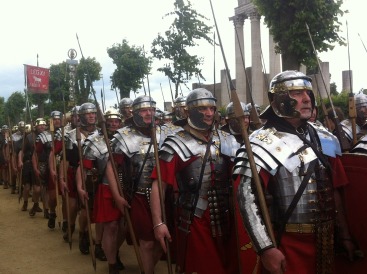
I would like to share with you a fact from history that will help enhance your need to understand fellowship as a tool in spiritual warfare. The Romans used to fight with a shield called a scutum. This shield was four feet tall and two feet wide. It was designed to cover the majority of a soldier’s body. A group of Roman soldiers with these shields fought in a single unit. Those in the front linked their shields side by side. Those in the second row would lift their shields over the heads of the soldiers in front of them. The third row would to the same. This formed a “turtle” formation of protection as they marched forward. There was ample protection for everyone; they had to fight as one person.

In Ephesians 6:12-18, Paul talks about the shield of faith. The Greek word for shield is thuros. The root word for thuros is a door. It is a direct reference to the scutum shield from Roman times. Different soldiers in the Roman Army had different kinds of shields. Paul’s use of thuros points us to a great spiritual truth.

In order for God’s army to be effective, we must learn to link our faith with the faith of others. When we read the Bible, God’s people always worked together. Moses worked with Joshua and the elders under them. Jesus sent the 70 out two at a time. The Apostles worked together to resolve issues and transact Kingdom business. Paul worked with Timothy and the elders under them.

As Solomon said: “11 Also, if two lie down together, they will keep warm. But how can one keep warm alone? 12 Though one may be overpowered, two can defend themselves. A cord of three strands is not quickly broken” (Ecclesiastes 4:11-13)

“In a lawsuit the first to speak seems right, until someone comes forward and cross-examines” (Proverbs 18:17).

We were made to work together. When we fellowship, we impart counsel to one another, often without knowing it. When I came to my present church, my early days were spent drinking in what others had to say so I could live God’s way. Many times people didn’t know everything I was going through, but someone would usually say something that I needed to hear at that precise moment! Today, it is hard to get people to do that.

So many times people come to church and they think they have it all figured out. Because of our individualistic society, we think we don’t need anyone else in the Body. Often, people read a few internet articles and they deem themselves the expert on every issue; this attitude will often disregard those who have toiled for years in obedience to God.

We need the counsel of the wise (Proverbs 25:22, 11:14, 26:4). Someone else has the Word for us when we are weary (Isaiah 50:4). We need encouragement and even correction. People are going through trials and they need clues to help them persevere. We need to pray, study, and even eat together. Jesus did all these things with others.

Will we have differences? Absolutely. The Bible tells us: “As iron sharpens iron, so one person sharpens another” (Proverbs 27:17). When iron and iron hit each other, there are sparks. When we fellowship, there will be differences of personality. We must not put other people down because they are different. We can all seek truth together and still submit to the authority God has established.

I encourage you all to go to church early; be excited to go. Stay late; be sad to leave and hang out as long as you can. Spend some time getting to know people you don’t know right now. Make time to see someone during the week. We need each other. Let’s be the Body of Christ and not just talk about it.

“And let us consider how we may spur one another on toward love and good deeds, 25 not giving up meeting together, as some are in the habit of doing, but encouraging one another—and all the more as you see the Day approaching” (Hebrews 10:24-25).

Posted in Uncategorized | 4 Comments

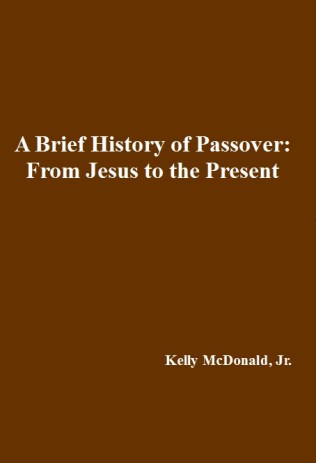
New Booklet Release – A Brief History of Passover

passover-history-pic


Many Christians today do not pay much attention to the celebration of Passover, but it was the last celebration Jesus honored before he suffered and died for our sins. Passover is the only event that Jesus said He eagerly desired to celebrate (Luke 22:15). In this booklet, you will learn how the earliest disciples of Jesus continued to celebrate this important festival, and how many other believers from that time until now did the same. There has always been someone somewhere honoring this powerful time of the year.

TO read this FREE booklet, CLICK HERE!

Posted in Uncategorized | Leave a comment

Teshuvah: A Life-Changing Season

Teshuvah

Teshuvah: A Life-Changing Season

Teshuvah starts this weekend. This is a powerful time of the year that the Lord will really use to bless your life. The sixth month on the Hebrew Calendar is called Elul. The Jewish people call this time TeshuvahTeshuvah literally means to return back to where you came from. It is a month-long period before the Fall Festivals.

Whenever we read a prophetic book of the Bible, we must remember that the book gave instructions not just for the past but also for the present. The book of Haggai explains to us this prophetic season and how to prepare for the Fall Festivals.

Haggai 1:1-6

“1 In the second year of King Darius, on the first day of the sixth month, the word of the Lord came through the prophet Haggai to Zerubbabel son of Shealtiel, governor of Judah, and to Joshua son of Jozadak, the high priest: 2 This is what the Lord Almighty says: “These people say, ‘The time has not yet come to rebuild the Lord’s house.’” 3 Then the word of the Lord came through the prophet Haggai: 4 “Is it a time for you yourselves to be living in your paneled houses, while this house remains a ruin?” 5 Now this is what the Lord Almighty says: “Give careful thought to your ways. 6 You have planted much, but harvested little. You eat, but never have enough. You drink, but never have your fill. You put on clothes, but are not warm. You earn wages, only to put them in a purse with holes in it.”

The Lord instructs us to consider our ways during this season. It is important for us to take the time and examine our lives. In our fast-paced world, we can be so on the go that we forget to stop and reflect on our relationship with God. During this season, the Lord is asking us to stop and see where we are at in HIM.

Notice the things that God addresses in these verses. 1) He addresses giving thought to our ways (that represents our walk with Him). 2) He addresses the harvest. 3) He addresses our physical state.

Teshuvah has four weeks in it. There is a four-week process to help us address these areas of our life. In this process, you will see God do miracles this year and years to come.

Week 1 – Make a sin list and burn it. I know this sounds different to people, but Pat Robertson wrote a book years ago about revival. He said the first step was to get right with God, make a sin list, and burn it.

“Take words with you and return to the Lord.” (Hosea 14:2)

We should live a life of repentance, but we need to take the time to comb our hearts. We need to repent not just for the sins we commit, but the thoughts of our mind and the intentions of our heart. Writing them down brings the seriousness of our behavior home to the heart.

Week 2 – Spend serious time in prayer and intercession for others. Notice that God mentions the harvest in the verses above. The harvest can be spiritual, meaning people won to the Lord. When we have repented before the Lord, we can now seriously intercede for lost loved ones, our leaders, and the nation. Pray for the saved to come into a closer relationship and greater truth in their walk with God.

Week 3 – During this week, we want to focus on the spiritual harvest. Write down all of your assets and debts on a sheet of paper. This is called a net worth statement. Write down goals for this upcoming year. You obviously want debts to go down (or go away altogether!) and assets to go up. Your income needs to increase if at all possible. A goal I always recommend is to read the Bible through once every year (from Genesis all the way through Revelation). From year to year, you will be able to track the mighty blessings of God in your life. You will see how he does miracles in your life. We don’t thank God enough. Writing everything down allows our blessings from God to really sink in our minds. We realize just how much we are blessed. Remember, faith without works is dead (James chapter 2). In the business realm, we learn that people who write down their goals are far more likely to achieve them. God wrote down His plans in a book (the Bible). We need to write ours down.

Week 4 – Spend serious time with the Lord on your face seeking His will for your life. Spend time adoring Him for the greatness of His blessings in your life. We have so much to be thankful for – eternal salvation, the gifts of the Spirit, the Holy Spirit, and all the other wonderful blessings in life.

What you are doing is setting up a disciplined way of life. You are setting up habits for this upcoming year. You are considering your ways and really surrendering everything to Jesus Christ. I have done this for the past 9 years and never been disappointed. I am amazed at how God blesses me over and over again in this process. I am amazed at how this helps me to hit the “reset” button on my life and keep me going in the right direction.

In closing, I want to share a testimony I had from Teshuvah in 2010. In 2010, I was broke as a joke. I was working at McDonald’s part time (10-15 hours a week) and trying to sell insurance full time (45-60 hours a week). Things weren’t going well financially; I think I made $12,000 that year.

As I made out my goals list, I thought I would be bold. I thought I would put down a goal of TWICE the income I had made the previous year. The Lord then spoke to me and said, “Is that all you want?” This really took me by surprise. So, I took that as a sign that I needed to aim higher! I wrote down an income of FOUR times what I made the previous year!

And guess what? – I made almost exactly that much money that year! God brought a major increase in my life. Be sure to make goals you plan to work for. I worked more that upcoming year than I ever had worked before. I was bold enough to write down a large goal, and He supplied everything I needed to meet the goal.

In Isaiah 55:6 God said, “Seek God when He is at hand; Call upon Him when He is near.”

The Fall Festivals are the greatest outpouring of God’s Spirit all year. In the sixth month, God is especially near. This is the time to call out to Him with more of our time than we do the rest of the year. It is the time to get square with Him.

If you follow these simple steps, your life will never be the same.

Check out this free booklet: Our Hebrew Roots
Just Click HERE

Posted in Uncategorized | 4 Comments

Understanding Bible Prophecy


Ancient Scroll

Understanding Bible Prophecy

There are some things to keep in mind as you examine the prophecies of the Bible.These basics will guide you toward better understanding prophecy.

The first aspect of prophecy is that symbols are used. These symbols come from other prophecies and even other places in the Bible. Use the Bible to interpret the Bible.

One interesting symbol of prophecy is that nations are usually depicted by beasts. For instance, Babylon is depicted as a lion in Daniel 7. Greece is depicted as a leopard. Horns can represent kings or kingdoms (see Daniel 7:7-8, 19-25, Revelation 17:12).

There are also different ways of reckoning time in Bible prophecy. Some prophecies are understood where one day represents one year. For instance, in Numbers chapter 13, the twelve spies sent out into the wilderness searched the land for forty days. Ten of the spies brought a bad report and led Israel astray. As a punishment, the Israelites spent forty years in the wilderness (Numbers 14:26-35). They spent one year in the desert for each day that the spies searched the land.

In Revelation chapter 2, Jesus told the Smyrna church that they would suffer persecution for ten days. The church had two, ten year persecutions from 303-313 AD and then again from 314-324 AD (the second one only occurred in the Eastern Roman Empire). We can see how one day represented one year in the fulfillment of this prophecy.

In prophetic books of the Bible, sometimes a year is called a time. The term times refers to two years and half a time refers to half a year. A prophetic year is 360 days, composed of 12 months with 30 days each.

In Revelation 11:3, it says that the two witnesses prophecy for 1,260 days. This is 3 1/2 years. In Revelation 12:14, it says that the woman is taken to the place prepared for her to be prepared for a times, time, and half a time (3 1/2 years). In Revelation 13, the beast power is given authority for 42 months (Rev. 13:5). Once again, this is 3 1/2 years. These are different ways to reckon time. In these examples, we see three ways to reckon the same period of time!

When you study prophecy, specific events are mentioned. One specific event mentioned in prophecy is the Time of Jacob’s Trouble (Jer. 30:4-6). Another specific event mentioned is the Day of the Lord. The Day of the Lord is a general phrase referring to a time of judgment. It can refer to any number of events, including: the Rescue of the Saints (Luke 17:20-37), the First Resurrection (I Corinthians 1:8), the Wrath of God (Zephaniah 1), the destruction of the armies at Armageddon (Zech. 14) or the Great White Throne Judgment (2 Peter 3:10). To understand which day or time period the Bible is referring to, you have to read the context. Context is vitally important in understanding any Bible prophecy.

Many prophecies are dual in nature, meaning they have a past or former and a future or latter fulfillment.The former fulfillment refers to a prophecy that has already come to pass. This “former fulfillment” foreshadows a future event called the latter or future fulfillment. This is a fulfillment that has yet to come. The former guarantees that the latter will happen.

Jesus foretold that the Temple would be destroyed (Matthew 24:1-2). It was destroyed in 70 AD. This is a prophecy that has already come to pass in part. However, if we read all of Jesus’ prophecy and compare it to other places in the Bible, we can see that there is a future attack on Jerusalem that will take place. He uses the destruction that would come in 70 AD to foretell of a future destruction in the future at the END of the age (Matthew 24:3). The rest of the chapter explains this.

Another basic teaching of Bible prophecy is that God often addresses an entire nation. Most prophecies you read are addressed to entire nations like the nations of Israel, Judah, Assyria, Babylon, Moab, etc. Because He is addressing an entire nation, He is addressing all the people that live where that nation is located.

When a prophecy is given, the Lord is referring to the location of a nation (or nations) at the time that prophecy is supposed to come to pass. When the Lord is prophesying about events that have yet to take place, He is referring to nations where they are located in the world today.

For instance, in ancient times, the Medes dwelt in the Middle East with the Persians. Since then, they have migrated to western Russia. We discussed this in our article on “Russia in Prophecy”. You can scroll down to find it. To this end, we must look at Biblical descriptions of these nations in the last days and compare them with modern nations. The use of history is important because history is a witness of what actually happened in the world at a specific point and time.

The main nations God addresses prophetically are the houses of Israel and Judah. Other nations are mentioned in the Bible only as they come into contact with them

This is a basic overview of Bible prophecy to help you understand how to interpret the Bible prophecy

Posted in Uncategorized | 1 Comment

Who is India in Bible Prophecy?

India Flag

flag of India

Who is India in Bible Prophecy?


India is a nation located in lower Asia. Its population is about 1.2 billion people. They have a large military and is a vital world ally for those seeking to gain an advantage. Their economy and production ability commands the attention of all nations. A nation this large is going to have a huge impact on world events in the last days. It is mentioned in the Bible!

How we find India in Bible prophecy is interesting. It is only mentioned by name twice in the Bible (Esther 1:1, 8:9) Interestingly enough, it is mentioned in the same sentence with Ethiopia. This is not by coincidence! The Hebrew word “Kush” or “Cush” is typically thought of as referring to Ethiopia. Another related country, Libya, is usually thought of as being the Hebrew word “Put” or “Phut”. When used together, these two Hebrew words can refer to India!

The historian Herodotus notes that there were two types of Cushites: curly haired and straight haired. He notes that some of the straight haired Cushites migrated into the area of India (Herodotus 3:94, 7:70). Their hair was the only difference in appearance between them. Josephus makes note of this (Antiquities of the Jews Book 1, Chapter VI). The same can be said of Put (Smith’s Dictionary of Roman and Greek Geography, “India”). The Bible tells us that the Assyrians even took Ethiopians captive to this area of the world (see Isaiah chapter 20).

This explains why the Hindu Kush Mountains are right by India. There are also other territories carrying the “KSH” sound in them. Kashmir is an important province in India. Cushul is another city in India. As the Cushites migrated to this area, they left their mark. The word “Put” is routinely used in the Bible for war (Jer. 46:9, Ez. 27:10, Ez. 30:5, Ez. 38:5, Nah. 3:9). The best warriors in India and even the ruling class for centuries were called the Rajaputs (or Rajput – see 1911 Encyclopedia Britannica “Rajput”). Rajaput means king or ruler of put.  When Cush and Put are used together it actually refers to India! This nation has the second largest population in the world, produces a tremendous amount of fruit every year, and has a major role in the political arena in the last days.


Prophetic Implications:

#1 – Ezekiel 38 – Cush and Put are mentioned right beside Iran (identified as Persia). This affirms Cush and Put as India. There are very few connections between Ethiopia, Libya, and Persia mainly due to distance. The connections between Persia and India are numerous! First of all, India is closer to Persia geographically. These nations have had close economic ties in recent years because Iran is the nearest nation to India that can provide oil and natural gas. Discussions have been ongoing to build a pipeline between the two nations. In 2015, India agreed to invest nearly $200 million into the port city of Chabahar in Iran (Pearson)! Iran has the highest population of shia’ muslims in the world. In 2009, India had the 3rd highest shia population in the world! India’s immediate neighbor to the northwest is Pakistan, who they have had major issues with over the years. Pakistan is also a Sunni Muslim nation! This gives Iran another reason to ally with India. Another interesting historical note is that the Persian language was spoken in the royal court of India until the 1800s (Ali Khan).

The prophecy of Ezekiel 38 occurs on the mountains of Israel, which refers to the US/British peoples. On July 24, 2015, the Telegraph UK reported the desire of the people of India to request “reparations” for their colonization of India. One of the front-runner politicians is passionately arguing for this, and the present Prime Minister supports the idea. The anti-British sentiment is growing in the nation. (see also http://www.theguardian.com/world/2015/jul/24/indian-prime-minister-modi-endorses-britain-paying-damages-for-colonial-rule)

In ancient times, Sheba and Dedan consisted of the East Coast of Africa and the southern tip of the Arabian Peninsula. The Queen of Sheba in Solomon’s time lived in this area. They also traded considerably with India. This again ties India with Ezekiel 38.

#2 – Daniel 11:40-45 – In this prophecy, we see a character called “the King of the North” invade the “King of the South”. We reviewed in “Understanding Bible Prophecy” that the King of the North refers to a Revived Roman Empire led by Germany. The Bible tells us that the King of the North “…shall have power over the treasures of gold and of silver, and over all the precious things of Egypt: and Cush and Put shall be at his steps.” The Hebrew Phrase “At his steps” simply means “to keep pace with or companionship.” This could very well refer to the King of the North conquering from Egypt all the way to India, like Alexander the Great and other Roman Rulers of the Past.

#3 – Cush and Put are not mentioned in Ezekiel 39 attack against Jerusalem. This battle refers to Armageddon. This likely points to some catastrophic event or war that disabled India from being able to act.

Side Note:

An interesting fact in that the Hebrew names for Ivory, Ape, and Peacock come from the Tamal language on the Indian continent (Smith’s Bible Dictionary, 1884, “Ape”)!


References:

Panda, Ankit. “India, Iran, and Oman Open Talks on Deep Sea Gas Pipeline”. The Diplomat. March 1, 2014. http://thediplomat.com/2014/03/india-iran-and-oman-open-talks-on-deep-sea-gas-pipeline/

Pearson, Natalie Obiko. India Opens Gateway to Central Asian Gas Riches After Iran Deal. August 7, 2015. Bloomberg. http://www.bloomberg.com/news/articles/2015-08-06/india-opens-gateway-to-central-asian-gas-riches-after-iran-deal

Ali Khan, Mir Auub. Decline of the Farsi Language. Jan 7, 2012. The Times of India. http://timesofindia.indiatimes.com/city/hyderabad/Decline-of-Farsi-language/articleshow/11395425.cms

Posted in Uncategorized | 1 Comment

Historical Perspective on Romans 10:9


bible_book_christian.jpg

“…because if thou shalt confess with thy mouth Jesus as Lord, and shalt believe in thy heart that God raised him from the dead, thou shalt be saved…” (ASV)

Being a Christian is more than just going to church. It is something that we must confess. According to the Strong’s Concordance, the Greek word translated as confess means to “assent, covenant, confession, or promise.”

When we turn away from the kingdom of darkness to the Kingdom of Light, we must learn to confess Jesus as our Lord. When our old friends try to pull us back into the world, we must confess Jesus is Lord. We must learn to testify as to what He has done for us as Lord and Savior.

To believers in later time periods, to confess Jesus as Lord took on a whole different meaning than we might think.

Let’s fast forward to 81 AD. At this time, Domitian became emperor of the Roman Empire.  He was a very arrogant ruler who actually began to proclaim himself as lord and god (dominus et deus in latin). In fact, all documents and conversations were required to address him as so! We learn this from Roman historians (quoted below).

“With no less arrogance he began as follows in issuing a circular letter in the name of his procurators, “Our Master and our God bids that this be done.” And so the custom arose of henceforth addressing him in no other way even in writing or in conversation…” (Suetonius “On Domitian” chp. 13, sec. 2)

“For he even insisted upon being regarded as a god and took vast pride in being called “master” and “god.” These titles were used not merely in speech but also in written documents.” (Cassius Dio, book 67, 4:7)

Some Roman emperors required that subjects of the empire confess that Caesar is their Lord! The alternative was imprisonment, torture, and even death. This brought a deeper meaning to Paul’s exhortation in Romans 10:9. Confessing Jesus as Lord was more than just a saying. To confess that Jesus was Lord was to confess that Caesar was not your Lord. This meant your life was in danger. It was a confession that you were willing to die for Jesus.

One specific example from the pages of history is Polycarp. He was a disciple of the Apostle John, who was martyred around 155 AD. A brief account is below:

“…it being a great Sabbath, and he was met by Herod, the captain of police, and by his father Nicetes, who took him into their carriage, and sitting beside him endeavored to persuade him, saying, ‘For what harm is there in saying, Lord Cæsar, and sacrificing and saving your life?’ He at first did not answer; but when they persisted, he said, ‘I am not going to do what you advise me.’…Polycarp said, ‘Eighty Six years have I been serving him, and he has done me no wrong; how then can I blaspheme my king who saved me?’…But the proconsul said, ‘I have wild beasts; I will throw you to them unless you repent.’ But he said, ‘Call them; for repentance from better to worse is a change we cannot make. But it is a noble thing to turn from wickedness to righteousness.’… “24. But he [the Roman proconsul] again said to him, ‘If you despise the wild beasts, I will cause you to be consumed by fire, unless you repent.’ But Polycarp said, ‘You threaten a fire which burns for an hour, and after a little is quenched; for you know not the fire of the future judgment and of the eternal punishment which is reserved for the impious. But why do you delay? Do what you will.’ (Eusebius, Church History, Book 4, Chapter 15, Sections 15, 20, 23-24; He wrote a church history in the 300s AD.)

Polycarp, like the other martyrs, refused to call a man his Lord. Paul’s words once again come to life in our minds. Polycarp requested to be burned with fire, and died a great hero of the Lord.

We live in an age where so many are cheapening the grace of God. This has caused many to proclaim that Jesus is their Lord, yet living as if He is not their Lord. These historical examples help us to realize that to confess “Jesus is Lord” is a very serious and sober action. To confess Jesus as our Lord is to confess that we have no other lords or masters in our lives. We are confessing that He is our provider and protector. It is to confess that we are willing to die for our Lord, as He was willing to die for us.


Posted in Uncategorized | 1 Comment

Who is Russia in Bible Prophecy?

Soviet Russian Flag

Who is Russia in Bible Prophecy?

Russia has been a major player in end-time world events starting with World War I. It was the Bolshivek revolution in 1917 that opened the way for Russia to become communist. This had a tremendous impact on World War 2 and directly caused the Cold War. Russia has spread communism all over the world, and the effects of its Cold War influence are still felt today.

They are one of the world’s leading oil and gas producers. They have the largest nation in terms of land mass on planet earth. Due to the large expanse of their nation and the types of peoples it covers, they will be found in various places in the Bible.

The Assyrian Historian A.H. Sayce notes that the names of peoples called the “Tubla and Muska” were found in ancient inscriptions in Northern Iraq (A.H. Sayce, The Races of the Old Testament, 1893. pg. 48). Herodotus also mentions these peoples together as the Moschi and the Tiberani (Book 3:94). The geographer Strabo, writing in the early 1st century AD, discusses the Moschi Mountains as extending from lower Armenia and into Albania (Strabo, Book XI, Chapter 2,12). Strabo did not do much research north of this area. These people groups eventually migrated north into the nation we call Russia.

In history, one of the nations in Russia proper was called the Muscovite Nation. Meshek is an ancient name for Moscow, which is in the region of Muskovy and sits on the Moskva river (Meshek in Hebrew is simply MSHK, which could be pronounced any number of ways over time). Tubal refers to the middle part of Russia, in which is a city named Tobolosk. This city sits on the Tobol river.

Rosh is a word in Hebrew which means “head” or “chief”. Rhos and Rus have been names used for Western Russia/Eastern Europe for over 1,000 years. This is where the name Russia actually comes from (see also nations like BelaRUS). This evidence allows us to pair Rosh, Meshek, and Tubal together, as they are all mentioned beside each other in Ezekiel 38:6 as dwelling “in far north.”

The Russians and other Eastern Europeans have another Biblical nation associated with them. The Medes and Persians were an alliance of two nations between 600 and 334 BC. Herotodus mentions that they had colonies in Eastern Europe around 400 BC (Book 5:9). The Medo-Persians were defeated by Alexander the Great in 334 BC. At this time, the Medes began to migrate. In Strabo’s account of Geography, he mentions the Medes alongside the Moschi (Strabo, Book XI, Chapter 2,12). These people dwelt together. Pliny the Elder in the latter 1st century noted that some of the Medes had migrated to the Don River, which is one of the major rivers of Southern Russia (Natural History Book VI, verse 19).

About 9 years ago, Russia and Iran began formal cooperation with each other, especially in the area of military development. The symbol for Russia is the bear, which is the same animal used to describe the Medo-Persian empire of Ancient times (see Daniel 7:1-10). The bear in Daniel has one side raised up. In ancient times, the Persians had a stronger control of this alliance. In modern times, the MEDES (Western Russians) have the upper hand. They are raised up. When these nations agreed upon formal cooperation, it was bringing back this ancient alliance.

We see from these brief explanations of history that Russia is referred to as “Rosh,Meshech, and Tubal” and also as the descendants of the Medes.

Posted in Uncategorized | 6 Comments