Word #2 for 2015 – “Dynamic”


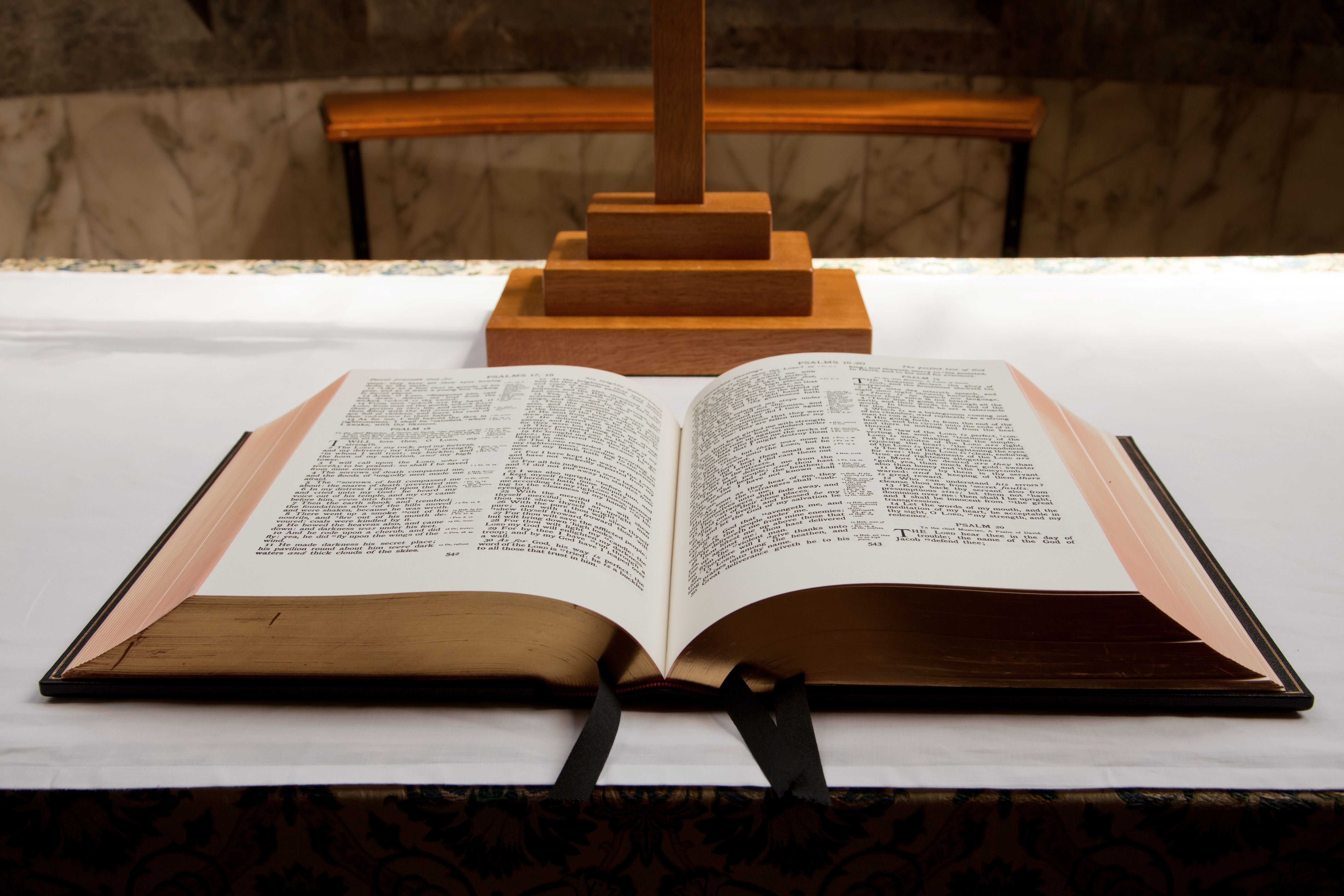
Open Bible

The second word for your upcoming year is “Dynamic”. I had a vision and I saw the word “Dynamic”. What is a dynamic? We tend to think of the word dynamic as an adjective referring to something that is very expressive and energetic. For instance, we might say, “That was a dynamic presentation!”.

The way that God used this English word in the vision was different. The word dynamic can also be used as a noun referring to “…something that causes something else to change”. The Lord showed me that He is setting up dynamics in your life. There are systems and ways of doing things that He is setting up that are going to be recurring themes for a significant period of time. He is going to initiate new methods of doing business, new connections, new thought patterns and habits, and so forth.

Let me give you a practical example. In my life, the Lord has had me get really organized. I am organized now, but He is telling me to be micro-organized. This was something new for me, so I have started applying these things immediately. This is a dynamic in that is going to allow me to do other things in life. So, things are going to happen to you that might seem out of the ordinary or new. There might even be an intensity increased in the things you are already doing. They are dynamics that will cause other events to occur in the long-term.

Routines and practices in your ministry might change, your financial structure, family life, etc. A “ripple effect” is going to start early on in the year. These changes will open the door for new opportunities. As I write this, it may have already started for you. As God reveals different things to you, start practicing them. Ask God to see the dynamic so you can get in the flow of His will.

Word #3 will come soon!


Posted in Uncategorized | Leave a comment

Word #1 for 2015

Word #1 for 2015

Parable of the Shrewd Manager

Today, I am posting 1 of 3 powerful words to guide your year. In Luke 16, Jesus told us a parable about a shrewd manager. I am going to put the entire parable on this post because I think it is imperative that we understand what the Lord is saying at this prophetic hour.

Luke16:1-12

“Jesus told his disciples: “There was a rich man whose manager was accused of wasting his possessions. 2 So he called him in and asked him, ‘What is this I hear about you? Give an account of your management, because you cannot be manager any longer.’ 3 “The manager said to himself, ‘What shall I do now? My master is taking away my job. I’m not strong enough to dig, and I’m ashamed to beg— 4 I know what I’ll do so that, when I lose my job here, people will welcome me into their houses.’ 5 “So he called in each one of his master’s debtors. He asked the first, ‘How much do you owe my master?’ 6 “‘Nine hundred gallons of olive oil,’ he replied. “The manager told him, ‘Take your bill, sit down quickly, and make it four hundred and fifty.’ 7 “Then he asked the second, ‘And how much do you owe?’ “‘A thousand bushels of wheat,’ he replied. “He told him, ‘Take your bill and make it eight hundred.’ 8 “The master commended the dishonest manager because he had acted shrewdly. For the people of this world are more shrewd in dealing with their own kind than are the people of the light. 9 I tell you, use worldly wealth to gain friends for yourselves, so that when it is gone, you will be welcomed into eternal dwellings. 10 “Whoever can be trusted with very little can also be trusted with much, and whoever is dishonest with very little will also be dishonest with much. 11 So if you have not been trustworthy in handling worldly wealth, who will trust you with true riches? 12 And if you have not been trustworthy with someone else’s property, who will give you property of your own?”

The dishonest manager shrewdly cut the debts of everyone. The Greek word that is translated as shrewdly and shrewd in verse 8 (which I have put in bold), literally means practical wisdom. The dishonest manager found a way to still make a profit and make some friends for himself at the same time. That is simply practical.

In this parable lies one of the greatest prophetic revelations for our present time. When God has given you an assignment, sometimes we get bogged down. We have the cares of life or sometimes we have so much information or revelation that we cannot decide how to execute the assignment. You seemed overwhelmed. This parable has the key to solve your problem.

There is a spiritual warfare tactic that Satan uses all the time. If he cannot get you to fall into major sin, then he will overwhelm you with GOOD! Yes, I said it! He will OVERWHELM YOU WITH GOOD! This is to keep you so bogged down that you never execute the assignment.

Right now, God is saying that you need to finish the assignment. Perhaps you have been given a book to write. It’s taking a lot longer than it should take. Instead of writing a book, write a booklet. Be shrewd (practically wise). God gave you the assignment and also the anointing to fulfill the assignment. Putting something out there that conveys the idea and the anointing will accomplish the work. He will fill in the gaps. The worst thing you can do is not put anything out there because that is a failure to complete an assignment.

Essentially, the Lord is saying: you are trying too hard and trying to do too much. Be simple and execute. God wants the assignment finished. It may not be the length you or others want it to be, but finish it.

The Lord’s return is sooner than we think. In verse 10, Jesus said, “Whoever can be trusted with very little can also be trusted with much, and whoever is dishonest with very little will also be dishonest with much.” If we can be trusted with the assignment finished (even on a lesser scale, but done nonetheless), then the Lord knows He can still trust us with greater.

Take your assignments, simplify them, and finish them. For more details, search “Hebraic Thought Part 3” in my blogs.

Stay tuned for part 2!

Posted in Uncategorized | Leave a comment

The Gospel of the Kingdom of God – Part 2

The Kingdom of God in a believer is the greatest miracle we will ever experience. It is the transformation from earthly to heavenly, from material to spiritual. How do we show this Kingdom to others? Power is how the Kingdom of God enters into this natural world. Because this world has its set ways and fixed laws, it requires a higher power than humans to cause a change. In I Corinthians 4:20, Paul said, “The Kingdom of God does not depend on talk, but on power.” People like to talk at church. There are committee meetings, business meetings, personnel meetings, etc. There is a lot of talk in churches today. Talk is not what gets the gospel of Christ out. It is the power of God that advances His Kingdom purposes. The word power can have different meanings based on its usage and context in the Bible. There are different manifestations of power discussed in the Bible used by God to advance His Kingdom purposes. There are several ways that the Kingdom of God within us manifests outside of us.

The first manifestation of power in our lives should be the power of salvation, which is a changed life. For us to go from a life of living contrary to God to living a life for God, it requires power. It requires an intervening force. When we go from being a thief to a giver, that is God’s power manifesting. It is contrary to natural way of humans. When a person goes from drunkenness to sober and sound-minded, then that is God’s power manifesting. The natural course of humans is to be selfish and hurt others. There are mindsets that are destructive. We each as humans experience hurt, pain and suffering. Most people live their entire lives in these strongholds. Only God can free us.

In our world, politics is defined as “Who gets what when where and why?” It is the distribution of scarce resources. The vast of abundance of God’s Kingdom will be poured out through many people to many people. He will use the Spirit of God to bring this forth into people’s lives.

I would like to focus on one particular aspect of this Kingdom that the Lord is going to bring about through His children: healing.

If you are injured, the natural course of life is for you to nurse your injury until you recover. The Kingdom of God defies the natural realm. Therefore, by proclaiming the Kingdom to others, there will be manifestations that defy the natural realm. For instance, if someone has a broken arm and you pray for them to be healed in Jesus name. The broken arm being healed is a sign of God’s Kingdom to that person. It is an invitation and a wooing from God to enter into the World of Tomorrow. This is reiterated by Christ’s own words. In Luke 10:9, Jesus said, “Heal the sick who are there and tell them, ‘The kingdom of God has come near to you’”.  The Creator of the Universe rules the Kingdom of God. To see a change in Creation is a sign that the Kingdom of the Creator is at work!

Posted in Uncategorized | Leave a comment

The Gospel of the Kingdom of God – Part 1

In this series, we are going to look at the gospel of the Kingdom of God.

In Mark 1:15, Jesus said, “The time has come…The kingdom of God has come near. Repent and believe the good news!” Jesus talked about a Kingdom that was coming. That was the central focus of His ministry. His sermons and teachings gave us intimate details about that Kingdom. What does the gospel of the Kingdom of God mean, and how do we experience that Kingdom today?

Today, the world thinks that it can solve all of its problems by human intervention. We think that by human government and effort, we can make the world a better place. We are trusting in man. Our political leaders are trusting that other nations will solve their problems peaceably and not resort to war. The Romans wanted to spread the message that the Roman Empire would take care of all their needs, provide military protection, and give them hope for their future. When the gospel of the Kingdom of God was being proclaimed, it was a challenge to Roman dominance in the lives of people. Instead of looking to people and human effort to provide for our needs, we are to look to the Almighty God. Instead of relying on human government, we are to rely on the Government of God. 

Jesus was trying to focus people’s thoughts away from the earthly toward the spiritual, Heavenly realm. As Paul wrote, “Set your mind on things above, not on things on the earth” (Colossians 3:2, NKJV). By accepting Jesus Christ, we enter into a Kingdom where our needs are provided for. Jesus said in Matthew 6:25-33, “Therefore I tell you, do not worry about your life, what you will eat or drink; or about your body, what you will wear. Is not life more than food, and the body more than clothes? Look at the birds of the air; they do not sow or reap or store away in barns, and yet your heavenly Father feeds them. Are you not much more valuable than they? Can any one of you by worrying add a single hour to your life? “And why do you worry about clothes? See how the flowers of the field grow. They do not labor or spin. Yet I tell you that not even Solomon in all his splendor was dressed like one of these. If that is how God clothes the grass of the field, which is here today and tomorrow is thrown into the fire, will he not much more clothe you—you of little faith? So do not worry, saying, ‘What shall we eat?’ or ‘What shall we drink?’ or ‘What shall we wear?’ For the pagans run after all these things, and your heavenly Father knows that you need them. But seek first his kingdom and his righteousness, and all these things will be given to you as well.”

When we seek the Kingdom of God, our needs will be provided for. We also learn from Jesus’ words a proof of God’s existence: God exists because He knows our needs and will meet them. People in other religions (which Jesus called pagans), have to run after and search for food and clothing. They are worried about their daily needs. Why is this? They do not serve the one true God that created all things. They are trying to achieve these things by human effort alone to meet their needs. We should always do our part, but those that belong to God’s government receive supernatural intervention for their needs!


Learn more about this Kingdom in the next part of this series!

Posted in Uncategorized | Leave a comment

The Power of Attitudes

  Attitdues

Webster’s Dictionary defines the word attitude as “a mental position with regard to a fact or state; a feeling or emotion toward a fact or state; an organismic state of readiness to respond in a characteristic way to a stimulus (as an object, concept, or situation). In the Greek, a word for attitude is phroneo, and one of its definitions according to Strong’s Concordance is “to be (mentally) disposed (more or less earnestly in a certain direction).” From these definitions, we can see that an attitude is a mindset or perspective that predisposes us to act a certain way. In other words, an attitude determines what actions you are likely to either take or not take. For an example, consider a laid-back attitude. If you are operating in a laid-back attitude then you are less likely to be easily angered or overreact to a situation. Your attitude determined your action. Understanding attitudes is extremely important and can help us overcome the attacks of the evil one.

In the Garden of Eden, the serpent spoke to Eve and tempted her. The Bible records, “Now the serpent was more crafty than any of the wild animals the Lord God had made. He said to the woman, “Did God really say, ‘You must not eat from any tree in the garden’?  The woman said to the serpent, ‘We may eat fruit from the trees in the garden, but God did say, ‘You must not eat fruit from the tree that is in the middle of the garden, and you must not touch it, or you will die.’ ‘You will not surely die,’ the serpent said to the woman. ‘For God knows that when you eat of it your eyes will be opened, and you will be like God, knowing good and evil’” (The Holy Bible, New International Version, Gen.3.1-5). We have a tendency to think from the text that the serpent only spoke to Adam and Eve. While Satan did speak to Eve with words, he actually was conveying an attitude to them. The attitude or mindset that Satan conveyed to them was a mindset which believes that you do not have to do what God wants you to do. You can do whatever you want. You can become your own god and choose for yourself. You can do things your way and still have God’s blessing all at the same time.

This example in Genesis shows us the way that Satan attacks us. He attacks us by speaking attitudes into our hearts, minds, and spirits. In Ephesians 2:1-2, Paul wrote, “As for you, you were dead in your transgressions and sins, in which you used to live when you followed the ways of this world and of the ruler of the kingdom of the air, the spirit who is now at work in those who are disobedient.” Some translations say in verse 2 that Satan is the “Prince and the Power” of the air. What we have to realize is that Satan the devil is also the prince and power of the air waves. Satan is constantly broadcasting attitudes into your mind like a radio station broadcasts radio waves into the air. How do these attitudes begin to manifest in our lives and how can we recognize them? Paul says in these verses that Satan is the spirit at work in those who are disobedient. The Greek word for disobedient literally means a lack of faith. Satan begins by broadcasting into your mind disbelief about God. Satan may put things into your mind, such as: “Did God really create the world?”; “Do I really have to be filled with the Spirit?”; “Is the Old Testament really relevant today?”; “Is tithing really necessary today?” Each of these is designed to do the same thing that Satan did in the Garden – doubt God. The serpent started by making Eve question whether God’s spoken word was true! He was also questioning whether God’s word was necessary for their lives! The whole purpose of these attitudes that Satan broadcasts into your mind is simply an attempt to get you to step backwards. When you give up one vital truth of the Bible, you will give up another, then another, and others until you have given up all of them. Your actions will follow and then you will start to disobey. You will start to live contrary to the Word. This is why the Greek word for disobedience can mean disbelief. The attitudes that Satan broadcasts into your mind cause you to lose faith in God’s word and they lead to disobedience.

The attitudes in your life are a powerful concept to realize. We need to recognize the attitudes we have at any given time and ask yourself: “Is this an attitude from Satan?” The only way to turn from attitudes that lead to disobedience and gain access to the tree of life is to be transformed by the renewing of your mind and change the attitude of your mind (Romans 12:1)! This can only be done through Christ. You must repent and turn back to Him! The word repentance means a change in your mind. We have to change our minds from attitudes of disobedience to attitudes of trust and faith. Let’s examine our attitudes and weed Satan’s attitudes out of our lives so that he no longer has a foothold.

Posted in Uncategorized | Leave a comment

The Heart of An Evangelist

red_heart_in_hands

If you are going to keep up with my travels as an evangelist or support the Lord’s work through me, then it is important that you know some things about me. From time to time, I hope to give you reports about what I am doing and give you some insight into my life and how God brought me to where I am today.

I was saved at the age of 6 years old (March 15, 1992). I can remember the song that was playing – “Oh Why Not Tonight?” – which is page 397 in the All American Baptist Hymnal (green-back). Once I was saved, I went home and got the phone book out and started calling people and telling them about Jesus. A few days later, the Lord moved on me again, and I went door to door in my neighborhood telling people about Jesus. Later, I stood on my desk to tell my classmates about Jesus.

Since the time I was saved, I have always tried to tell people about Jesus. There have been times when this manifested stronger than others (such as now), but the message has been the same. Over time, I have met people with different life problems. I would share that aspect of Jesus that helped them best in their situation. My heart has always been to help people where ever they were at with whatever problem they were facing. The answer to everyone’s problems is the same; a true, genuine relationship with Jesus. However, different people need to see a different aspect of Jesus based on their life situation.

Now that I am an ordained Evangelist, I understand my calling going forward by looking at how God has moved on me in the past. If you study the Hebrew and Greek word for Evangelist, it means a messenger who proclaims victory from war. As Paul said, “…we are more than conquerors through him who loved us” (Romans 8:37). An evangelist proclaims the victory that you have in Christ before you or anyone else sees the physical manifestation. An evangelist is sent to set the captives free.

Imagine that you have cancer (some of you may). If I offered you the cure to cancer, would you take it? I hope the answer is yes! Let’s say you had a problem in life that has been holding you back from gaining victory spiritually. If I offered you the answer to the problem or the roadmap to your victory, would you take it? Once  again, I hope the answer is yes! God sends the Evangelist to help people where they are at by manifesting the aspect of Christ that is the key to their spiritual victory. There are healings, words of knowledge, words of wisdom, prophesies, and other manifestations that people need to receive victory and walk into the life of being “more than a conquerer”. An evangelist is sent to offer Christ-centered solutions to life’s frustrating struggles.

What breaks my heart is when God sends me to offer the solution and people don’t take it. There are so many people I have met over the years that have refused the cure to their spiritual “cancer”. This can be not only heart-breaking, but frustrating. Spiritually, God is showing me the answer. I can see so clearly how God will solve the problem. The choice is theirs, not mine. All we have to do is receive it! All I can do is pray and ask God to help me deliver His spiritual solutions in the way that gives Him the greatest glory. Also, I pray that others receive it!

This is the true heart of evangelism. There are people in this world who have self-destructive behavior, have been wounded spiritually, or are physically ill and hindered from doing God’s work. Sometimes there are mysteries in your life that hold you back from receiving what God has for you. An evangelist is sent as a messenger to convey the answer, the solution, or the cure that can only be found in Christ.

I have seen this in my past. I have always had a heart for people who are hurting and need help; those who just can’t get over the hump in life. Before I really knew my calling, I was already walking in my calling. Always remember that when you have the Holy Spirit, you will manifest aspects of your calling before you ever step into the fullness of your calling. David tended sheep before he became king of Israel. The Hebrew word for king is the same word for shepherd! God prepares you in advance for how you will serve Him.

Evangelism is not about numbers. If your efforts are simply to add to the church rolls, then you are not operating in true evangelism. This makes you a Pharisee, not a representative of Christ. True evangelism is best summed up by Paul’s words in I Corinthians 9:22b, “I have become all things to all people so that by all possible means I might save some.”  True Evangelism is seeking to help those of all stations of life with whatever they need to be all they be in Christ. Church, let’s offer the cure; let’s offer the solution. Let’s be light and salt; let’s bring life to this dead and dying world. Let’s have…

~An Evangelist’s Heart

Posted in Uncategorized | Leave a comment

Hebraic Thought Part 3 of 3

Jewish Quarter

This is the last part in the 3-part series on Hebraic Thought. In Proverbs 23:7a, Solomon wrote, “For as he thinketh in his heart, so is he:” The way that we think affects how we view the world and the Bible. This in turn influences how we live. In this last part, we are going to view form versus function.

Thought Pattern #3 that must be transformed: Form versus Function

The last thought pattern that we need to change is form versus function. In the Greek world, things were viewed by their form or by their appearance. This is why the statues of Greek heroes such as Alexander the Great look so detailed. Every single muscle is chiseled into the statue. We know that he did not look that way, but again, this is a focus on form. As Western believers, we agonize over the smallest details of things. We want things to look just perfect.

In the Hebraic world, things are viewed from the stand point of function. In other words – “Does it work?”. If it works, it is usable. In the Bible, we see God use people who were quite ordinary or even less than ordinary. They often had big problems! Gideon was considered the least important person in his family, and he was from the weakest tribe in Israel (Judges 6:15). God chose him to lead the Israelites to victory! Moses and Jeremiah could not speak very well. They were each chosen to be the spokesperson in their respective time periods! By outward form, these individuals were the very least – but when it came to function, they were people who would get the job done.

So, the Greeks might argue for hours about what makes a chair a chair, but the Hebraic mindset is that a chair is something you can sit on. The appearance alone is insufficient; the function of something determines its use.

There is nothing wrong to have something beautiful and orderly, for in God is found order. God told Adam and Eve to dress and keep the Garden of Eden. Form has its place in our lives. At the same time, form can destroy our faith.

The issue of Form versus Function often affects our worship. Too many times when we worship, we want to look a certain way. Were our movements perfect? Did we look dignified? You can look flawless worshipping God and never really worship Him. Your form can look great, but you can still miss the point. The Pharisees looked great outwardly, but inwardly they were full of dead men’s bones (Matthew 23:27)! The Greek mindset had severely influenced the people in Judea by the time of Christ!

Consider David. He worshipped God with all of his heart and even cast some of his clothing off of his body (2 Sam. 6:12-16). It did not look pretty. In fact, one of his wives scolded him for the way it looked. To God, David’s worship was beautiful and moved His heart. David is called a man after God’s own heart.

Paul wrote in 2 Timothy 3:5, we can be a people “…having a form of godliness but denying its power”. We are so focused on form; we miss the function of God’s Kingdom to manifest power. That power often manifests in ways that we do not expect or consider!

To really connect to our Hebrew roots, we must change our actions. We can put a tallit on, blow a shofar, and show up to church on Shabbat and still be mixed up in our doctrine and lives. We can flow in the gifts of the Spirit, but fail to see the Spirit at work in other ways. We must move from evolutionary thinking to cyclical thinking. We must start viewing God from His perspective so that we do not skew His character to other people. When our thinking changes, then our views of the Bible will change, and our lives will conform to His Word.

I hope you all have enjoyed this tremendous 3 part series!

Posted in Uncategorized | Leave a comment

Hebraic Thought Part 2 of 3

Jewish Quarter

We are going to continue the series on Hebraic thought. It is vitally important we understand how the writers of the Bible thought. Not a single writer of the Bible was a Greek. They were all Israelites. This means the way that they think is not the way that we think. We are going to continue with the second aspect of Greek versus Hebraic thinking.

Thought Pattern #2 that must be transformed: Abstract Versus Concrete

Greek thought views things as very abstract. The Greeks used to argue for hours about whether a table was a table or a horse a horse – or how we could ever really know it was a table or a horse. A table was viewed in terms of its “tableness”. They would debate about the meaning of love for hours.

If you ask most people “What is God?” – They will say He is ubiquitous, omniscient, all and knowing. Well, these are qualities of God, but they are abstract terms. Terms like faith become abstract and hard to explain with a Greek mindset.

The Hebraic mindset is very concrete. Things that we might think are abstract, such as love or God are compared to concrete objects in the visible world. For instance, God is compared to a shepherd (Psalm 23), fortress, or rock (Psalm 18:2). One of the Hebrew words for faith means to nurse a baby in your arms! By comparing God to these physical items in our world, it helps us to understand God. God is a shepherd in that He will guide us in the way that is best for us. He is a fortress because He will protect us. He is like a rock in that He is solid and dependable.

The danger of thinking abstractly is that important concepts in the Bible are misapplied. For instance, faith in the western world is usually used as a mental acknowledgement. In the western world, we often say that we believe something, whether or not our actions line up with what we profess to believe. So many people say that they believe in God, but the actions of so many “Christians” are either slack or opposite the Bible. Why is this?

The problem is that we view faith as an abstract, mental exercise. Therefore, no action is required on our part. Faith is simply we think, talk, or even argue about. The Biblical view of faith is that faith without works is dead (James 2). Our actions will prove what we really believe. Let’s practically apply this in our personal lives. If you believe there is $100 in your checking account, you will not have a problem writing a check for $50. If you do not believe the money is there, then you will not write the check. Abstract thinking causes us to fall into a spiritual apathy where we see no need to really live the Bible. Read Jesus’ words to the church of Laodicea (Rev. 3:14-22). This is the church era we are presently in, and this type of thinking is fueling inactivity in the Body of Christ. With faith as a mental abstraction, we do not see the need to act.

Here is another example of how this has affected our faith. People say they believe in the gifts of the Spirit, but they never try to operate in them. People say they believe in healing, but they never really pray for themselves or others to be healed. If we do not practice these things, then we really do not believe in it. Believing in these things is simply a mental thought exercise when we think like a Greek. When we think from the Hebraic perspective, they are real things that we practice because we believe them.

I challenge you to really sit down and think about some things you think you believe, but are not really practicing.

Posted in Uncategorized | Leave a comment

Hebraic Thought Part 1 of 3

Jewish Quarter

This opens a three part series on Hebraic Thought Versus Greek Thought. Most people in the Western world or in any culture with Western influence have been taught to think with a Greek mindset. The problem is that the Bible was not written from a Greek perspective. It was written from a Hebraic perspective. In Romans 12:2, Paul wrote, “Do not conform to the pattern of this world, but be transformed by the renewing of your mind. Then you will be able to test and approve what God’s will is—his good, pleasing and perfect will.” – There is a pattern of this world we must avoid. The Greek mindset conforms to this pattern. So much of what we believe as Christians and teach has been influenced by Greek culture. This mindset can lead us to false conclusions. Our minds must be transformed to think the way the Lord thinks. This will tremendously open up our understanding of the Bible!

Thought Pattern #1 that must be transformed: Linear versus Cyclical


The Greek mindset thinks linearly. For instance, someone with the Greek mindset sees things in terms of Event A is followed by Event B, which is followed by Event C, which is followed by Event D, which is followed by Event E, etc. Part of this mindset is that once we are at Event E, then Events A, B, C, and D are over with. They will not occur again. Take years for instance. The year 2014 is followed by 2015 which is followed by 2016, and so forth. The linear thought method leads people towards believing in evolution, where things are progressing and evolving into a higher state than what they were before.

The Hebraic understanding of time is cyclical, meaning that whatever occurs now has already happened before. Solomon worded it best, “The thing that hath been, it is that which shall be; and that which is done is that which shall be done: and there is no new thing under the sun” (Ecclesiastes 1:9, KJV). Thus, history is simply a series of cycles repeating themselves. Events A, B, C, and D occur, and then the cycle repeats. These cycles may have different details involved with them, but they are the same events occurring over and over again. This is re-iterated by the fact that God never changes (Mal. 3:6, Hebrews 13:8).

The linear, evolutionary mindset is completely opposed to creation and the Bible. Unfortunately, evolution is crammed into our minds from birth in the Western world. Due to this, we view the Bible from a linear, evolutionary mindset. I want to give you a list of misconceptions people have about the Bible because of the linear, evolutionary mindset.

Sometimes people believe that Christ nailed the Law to the cross in the gospels, changed the Feast days, or that Paul changed the gospel when he went to the Gentiles. These are all evolutionary thought patterns. The commandments and Feasts are found in the Old and New Testaments. In fact, even in the New Heavens and New Earth the whole world will keep the Sabbath (Isaiah 66:22-23). Jesus is the Lamb slain before the foundation of the world. How could He nail the Law to the cross if He was sacrificed even before the Law was given?

Some people believe the gifts of the Spirit were used in the first century and then faded away in the fourth century. This is another evolutionary, linear mindset. The gifts of the Spirit can even be found in the Old Testament. How can a New Covenant with better promises lack the power of God’s Spirit? The gifts of the Spirit are still alive and in operation today.

It is commonly taught that God the Father created everything, but the Son redeemed it. John 1:1-3 and Colossians 1:15-17 plainly state that Jesus created all things. When Jesus came, died, and resurrected, it was the Creator dying for the creation.

When God created Adam and Eve, their minds were not that far removed from God. In other words, they knew what God meant when He said it. Let me give you an example of this. In Genesis 7:1-2, God told Noah to take 7 pairs of clean animals and 2 pairs of unclean animals into the Ark. Notice that God did not take the time to explain to Him which animals were clean and which ones were unclean. Noah simply knew what God meant. As man continued to sin over years and years, the mind of man became farther away from God. God then called a man named Abram from his father’s house to go to the Promised Land. God revealed to Abraham all of his laws, statues, and commandments (Gen. 26:4-6). God’s people lived by His commandments until they went down into Egypt. After they came out of Egypt, the Lord has to reveal the Sabbath, dietary laws on clean and unclean animals, etc. all over again.

Have you ever noticed that as you read the Bible, God gave an increasingly greater amount of instructions? To Adam and Eve, He gave a few simple instructions: Be fruitful and multiply, take dominion, and don’t eat from the tree of the knowledge of good and evil. When Noah came off of the Ark, he was given even more instructions (Gen 9:1-17). God begins to give signs of the covenants He makes with His people. Starting in Exodus 20 and onward, God gives even more laws.

God was not giving something new, for nothing is new with God. As mankind continued to sin, the mind of man became farther away from God. This means that God’s requirements for mankind had to be re-introduced time and time again. When your read the Bible, there has only been on standard for God’s people, and that standard is summarized by the first five books of the Bible, known as the Torah. God gave different details at different times so that mankind could understand how He intended for us to live.

We have a re-newed covenant with the law written on our hearts. Truly, this was God’s intention from the very beginning (Deut. 26:16, Deut. 32:46).

As Christians, we often profess that we believe in creation, but we view the Bible from an evolutionary stand point! When we view the Bible from an evolutionary mindset, then we fail to see the same God working the same way throughout history. God evolves and changes, and His requirements change. The same cycles in Genesis we find repeated throughout the Bible because God never changes; His requirements for His people never change either.

Part 2 will be coming in a few more days!

Posted in Uncategorized | Leave a comment

Spiritual Momentum

Speeding Train

The Word of God records that there are fixed laws in heaven and on earth (Jer. 33:25). This means that there are fixed laws that God has set up that apply to us all. One such law is the law of gravity. Other laws include the laws of motion. One conclusion drawn from the laws of motion is that an object at rest tends to stay at rest and an object in motion tends to stay in motion. Alongside this is the fact that it takes less force to keep a moving object in a state of motion than the force required to move an object at rest. Basically, an object will continue doing what it is doing unless an outside force causes that change. From Romans 1:20, we learn that the natural things God has established teach us about His divine qualities. In other words, there is a spiritual application to these natural concepts. Take into account the law of momentum described above. In our walks with God, it is easier for us to keep our spiritual walk with God going when we are steadily reading our Bibles, praying, fasting, and obeying His Word than when we are not. When we are not consistently seeking God, then we have inconsistent results. We need spiritual momentum.

Jesus is the perfect example of spiritual momentum. Luke 13:31-33, records, “31 At that time some Pharisees came to Jesus and said to him, ‘Leave this place and go somewhere else. Herod wants to kill you.’ 32 He replied, ‘Go tell that fox, ‘I will keep on driving out demons and healing people today and tomorrow, and on the third day I will reach my goal.’ 33 In any case, I must press on today and tomorrow and the next day—for surely no prophet can die outside Jerusalem!” Jesus is praying for people to be free from demonic influence and healed from illness. The Pharisees try to get him to stop. Jesus’ reaction was to tell them that he had a goal to keep. He had to press in and continue until the goal had been met. Jesus knew that He had spiritual momentum going; he did not need to stop. Had he stopped, people would not have received their touch from God. Another great example is the feeding of the 5,000 in Matthew 14:13-21. In this passage, Jesus was ministering to a group of people. As evening approached, the disciples encouraged Him to send the people home. He did not accept their suggestion. He was looking for an opportunity to keep the spiritual momentum going. He then multiplies five loaves and two fish to feed the entire crowd. What a miracle of God! A final example of spiritual momentum is Christ being our sacrifice. Christ took the worst beating that any human will ever endure. He was lashed, spit upon, slapped, punched, and crucified. He went all the way for us. At any point along the way, He could have stopped it all. He kept the momentum going because He saw the end result and knew the spiritual harvest that would come.

Jesus said something very important in the Garden of Gethsemane before He was crucified. In the Garden, He was praying and asking the Father for strength while He bore the sin of humanity. In Matthew 26:41, Jesus said, “Watch and pray so that you will not fall into temptation. The spirit is willing, but the body is weak.” Jesus was weakened in His natural body. However, He knew that there was a force within Him which could keep Him going when He did not feel like going forward. The Spirit of God gave Him energy when He was weak! The strength from God’s Spirit gave Him the spiritual momentum He needed to carry the cross all the way!

How do we keep the energy and momentum going in our lives? The first key is by keeping the commandments. The commandments are fixed laws that never change. They will never change. For instance, Christ’s presence will always be present on the Sabbath. Christ performed many healings on the Sabbath (weekly and annual). The healing power He operated in on the Sabbath gave Him momentum for the rest of the week. The Sabbath is the last day of the week, but it serves as a foundation for the upcoming week! We have promises from God in the Bible that we will receive blessing and increase in our lives by obeying the commandments (Deut. 28:1-14). We have a promise that there will be spiritual momentum in our lives if we obey Him!

The second key to keep the spiritual momentum going is to have a daily discipline of seeking God. The root word for disciple is discipline. When the word discipline comes to mind, we usually think of punishment. However, it can mean a narrow focus of study. We must consistently seek God through prayer and reading our Bibles. I pattern my life after a thought called “immersion”. We were immersed in water through Baptism when we converted to Christianity. I immerse my life so that when I wake up, I read my Bible first. When I get into the car, I play a sermon on CD or I listen to Christian music. When I get a break at work, I may meditate. When I get home, I take care of every day natural tasks. We all have to take care of these items. Immediately afterwards, I get on to Kingdom work – whether it is writing this article, tweet a Bible verse, prayer, a sermon or some other task.  I am trying to immerse my life in Him. The third key to maintaining spiritual momentum is to keep going. As aforementioned, we all feel like giving up at times. Paul said, “My grace is sufficient for you, for my power is made perfect in weakness” (2 Cor. 12:9a). When we feel weak, Christ’s strength to carry the cross becomes activated in us.

Do you have a Kingdom-focused goal you have given up on? Do you feel unqualified or discouraged? Is there some service in God’s Kingdom you have let fall by the way side? The Creative Power of Christ is in you to keep the goal alive! The energy of the Holy Spirit within you will push you to keep going. Just make the decision to go forward and act. We are running a race for the prize. I encourage you to run with all your might! Christ commanded us to pick up our cross and follow Him daily (Luke 9:23). He commanded us to keep His spiritual momentum going.

Posted in Uncategorized | Leave a comment